




Hannover Messe 2026
Billed as the World’s Leading Trade Fair for the Manufacturing Industry, Hannover Messe 2026 focuses on more impact, more dialogue, and more business. Its new thematic architecture emphasizes clarity, targeted exchange, and formats that help industrial stakeholders orient themselves, connect across disciplines, and turn innovation into measurable business outcomes.
This ambition closely reflects today’s industrial reality. Manufacturing value chains are increasingly software-defined, globally distributed, and expected to remain secure, compliant, and adaptable over long lifecycles. As software becomes a decisive factor for differentiation and competitiveness, questions of protection, licensing, and lifecycle control move to the center of industrial transformation. This is precisely where Wibu-Systems contributes its expertise.
Expanding the CodeMeter Portfolio: Licensing-as-a-Service
Strategy First: Lower Barriers, Preserve Options
With CodeMeter Licensing-as-a-Service (CmLaaS), Wibu-Systems introduces a strategic expansion of its CodeMeter portfolio. CmLaaS addresses a core challenge faced by many software vendors: the need to launch modern licensing models quickly, without locking themselves into rigid architectures or sacrificing long-term control.
CmLaaS provides a professional starting point with preconfigured, industry-proven licensing models, while keeping the full depth of the CodeMeter ecosystem accessible as business requirements evolve. Vendors can start fast and scale deliberately, aligning licensing maturity with product growth, market expansion, and organizational readiness.
Technology in Practice: Proven Models, Real Control
From a technical perspective, CmLaaS delivers ready-to-use licensing models including perpetual, subscription, floating, trial, and feature-based licenses. These models can be activated immediately and adapted over time, without reengineering the licensing infrastructure.
CmLaaS is fully aligned with CodeMeter’s established backend technologies, license containers, and security concepts. This ensures architectural consistency and future scalability, even as licensing strategies evolve.
Protection Remains Essential: AxProtector as a Natural Complement
Licensing alone does not secure software. Protection against counterfeiting, reverse engineering, and tampering remains a foundational requirement, particularly for industrial and professional software.
AxProtector complements CmLaaS by providing robust application protection for native and managed code across platforms and programming languages. With recent enhancements, including increased automation and a modernized user interface, AxProtector supports faster adoption while maintaining strong, field-proven protection mechanisms. Together, CmLaaS and AxProtector address monetization and protection as two tightly coordinated elements of a single strategy.
Cyber Resilience Act: Building Security Across the Product Lifecycle
The European Cyber Resilience Act (CRA) establishes cybersecurity as a lifecycle responsibility for products with digital elements. Manufacturers are required to design products that are secure by default, document risks and mitigation measures, maintain update capabilities, and respond rapidly to vulnerabilities and security incidents.
As recently discussed in the VDMA Industry Podcast, the CRA does not demand zero-risk products, but it does require structured processes, transparency, and the ability to maintain security over time. In practice, this shifts cybersecurity from a one-time engineering task to a continuous operational discipline.
Technologies for secure software distribution, controlled feature activation, update enforcement, and lifecycle management play a key role in meeting these requirements. Licensing and protection mechanisms can actively support CRA objectives by defining which software versions may run, enabling controlled updates, and helping manufacturers respond pragmatically when vulnerabilities arise.
Post-Quantum Cryptography: Preparing for Long-Term Security
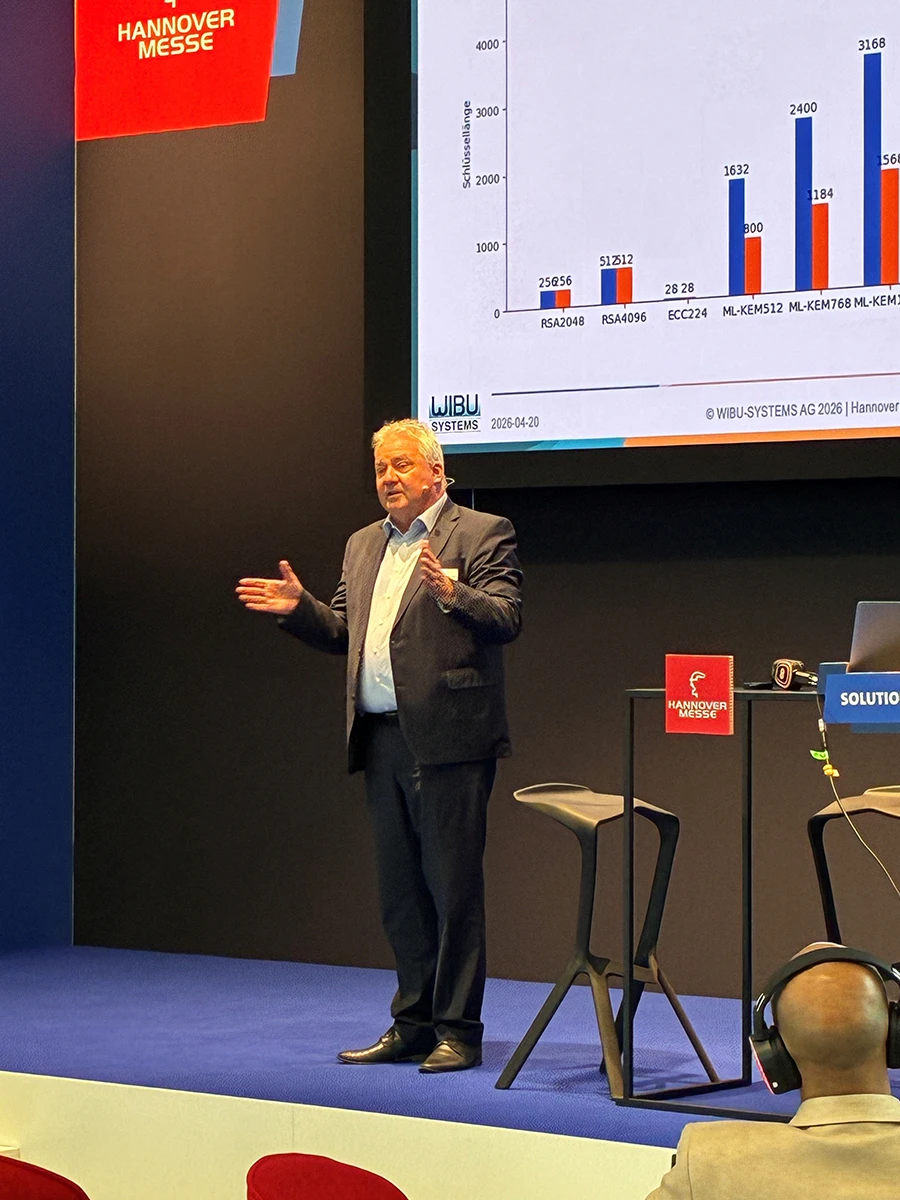
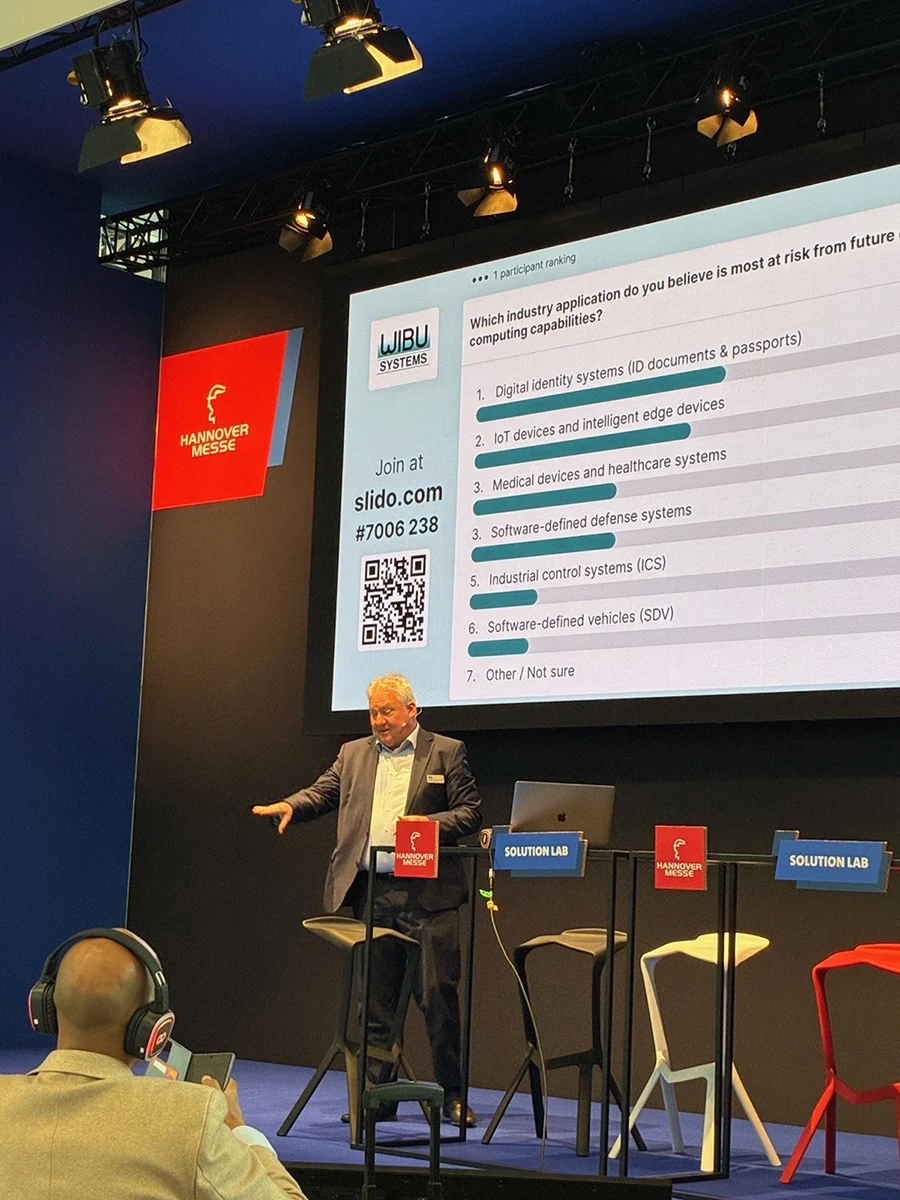
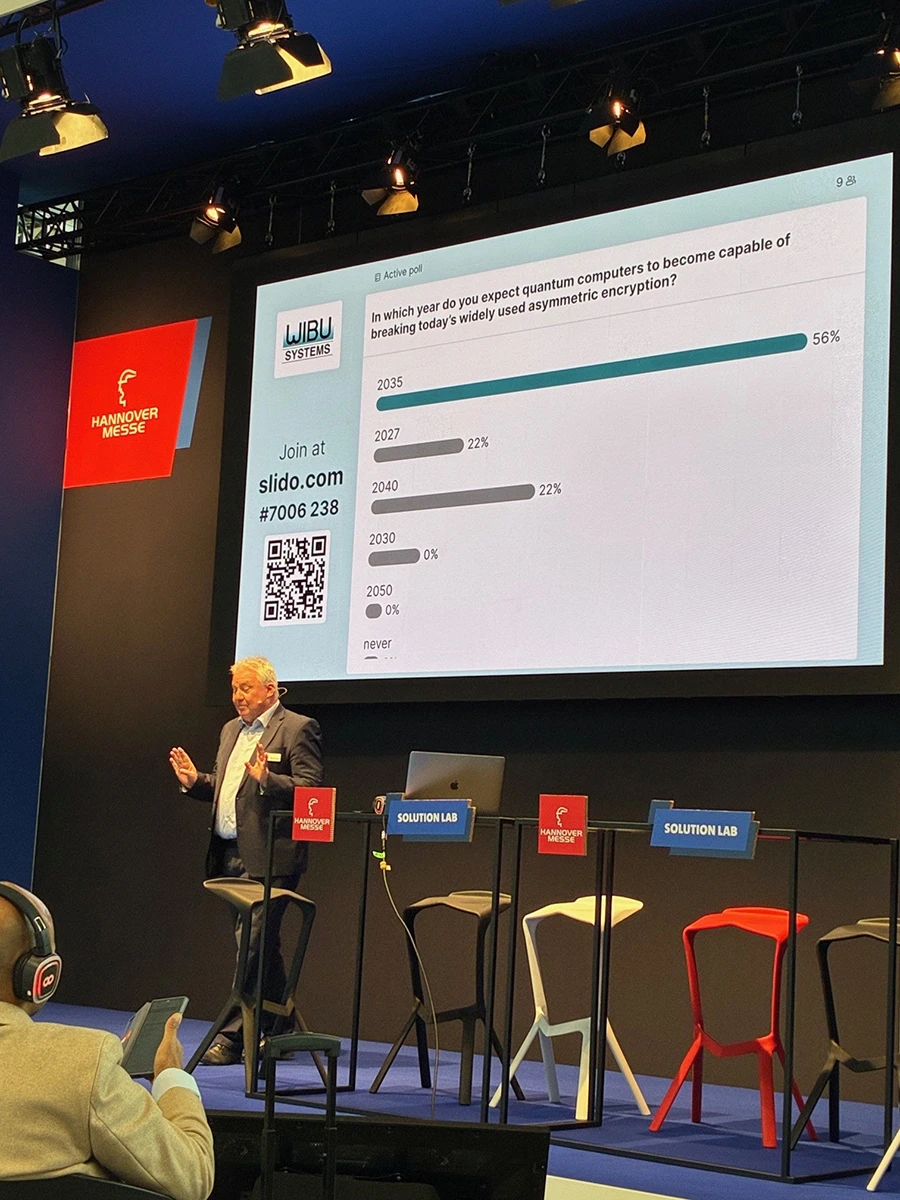
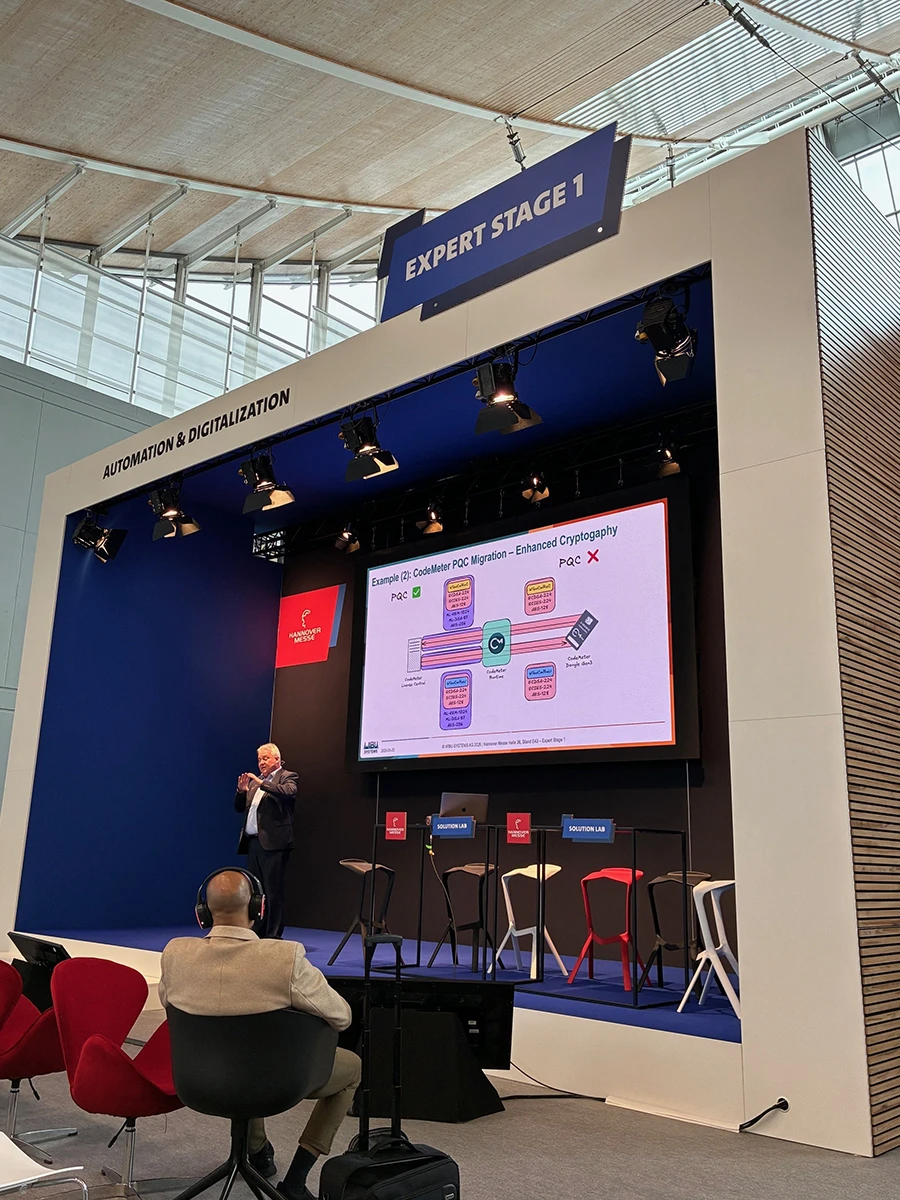
Oliver Winzenried, CEO and founder of Wibu-Systems, will also contribute to the Hannover Messe conference program with a technical session on Post-Quantum Cryptography (PQC). As advances in quantum computing challenge the long-term viability of current cryptographic systems, industrial software vendors must begin planning migration paths toward quantum-resistant security. The presentation explores the principles behind PQC and introduces the NIST-selected algorithms ML-KEM and ML-DSA, outlining practical strategies for integrating them into existing infrastructures and long-lived industrial systems. Particular attention will be given to the challenges of upgrading brownfield environments, evolving regulatory expectations, and the architectural decisions required to maintain trust in digital systems over decades of operation.
 20 April, 10.25 to 10.45 am CEST
 Hall 26, Booth E43 – Expert Stage 1 (Solution Lab Automation & Digitalization)
 Language: English
Digital Business Models for Software, AI, and Production Data
Oliver Winzenried will also participate in a roundtable discussion on the transformation of industrial value creation through digital business models. As software-defined systems, artificial intelligence, and connected production environments become central to modern manufacturing, new revenue opportunities emerge alongside growing cybersecurity requirements.
The discussion explores how integrated protection mechanisms embedded directly in software architectures can safeguard intellectual property, licensing models, update chains, and sensitive digital assets such as AI models or 3D designs used for distributed spare-part production. Rather than being merely a defensive measure, cybersecurity becomes a strategic enabler for modern digital business models, including feature-on-demand, subscription services, usage-based licensing, and secure remote updates.
The roundtable will examine how these mechanisms support sustainable industrial ecosystems where innovation, data-driven services, and long product lifecycles can coexist with strong protection and operational resilience.
20 April, 15.10 to 15.55 am CEST
Hall 26, Booth E43 – Expert Stage 2 (Solution Lab)
Language: German with live English translation
Live Software Hacking: How Modern Software Protection Works
How can software vendors protect technical know-how, enable modern licensing models, and support compliance with the European Cyber Resilience Act (CRA)? This live session offers a short introduction followed by a practical debugger demo comparing an unprotected application with a protected one.
Attendees will see how technologies such as obfuscation, stateful control flow encryption, and CodeMoving help prevent reverse engineering and tampering while securing intellectual property. At the same time, they enable new business models such as subscriptions, feature-on-demand, and usage-based licensing, while contributing to stronger software security across the product lifecycle.
23 April, 11.20 to 11.35 am CEST
Hall 26, Booth E43 – Spotlight Stage (Solution Lab)
Language: German
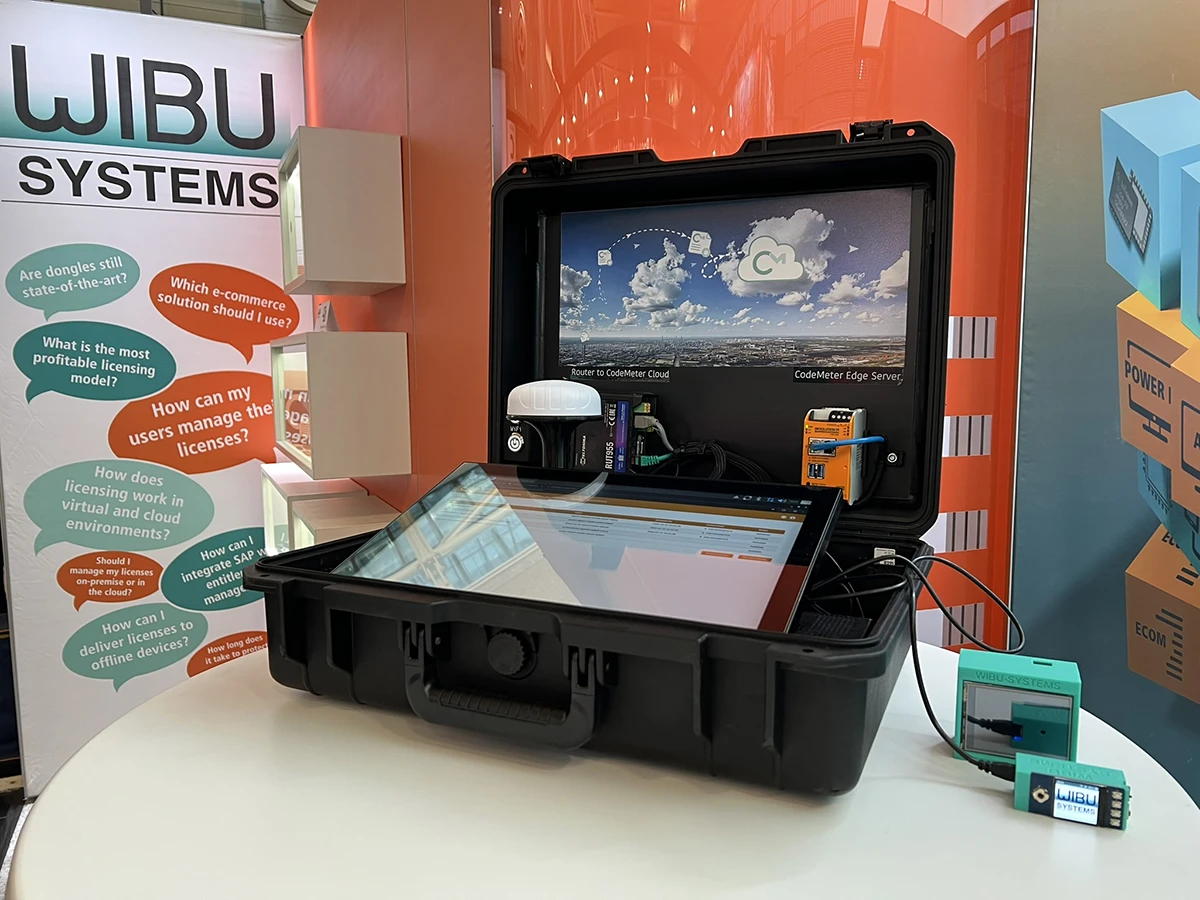
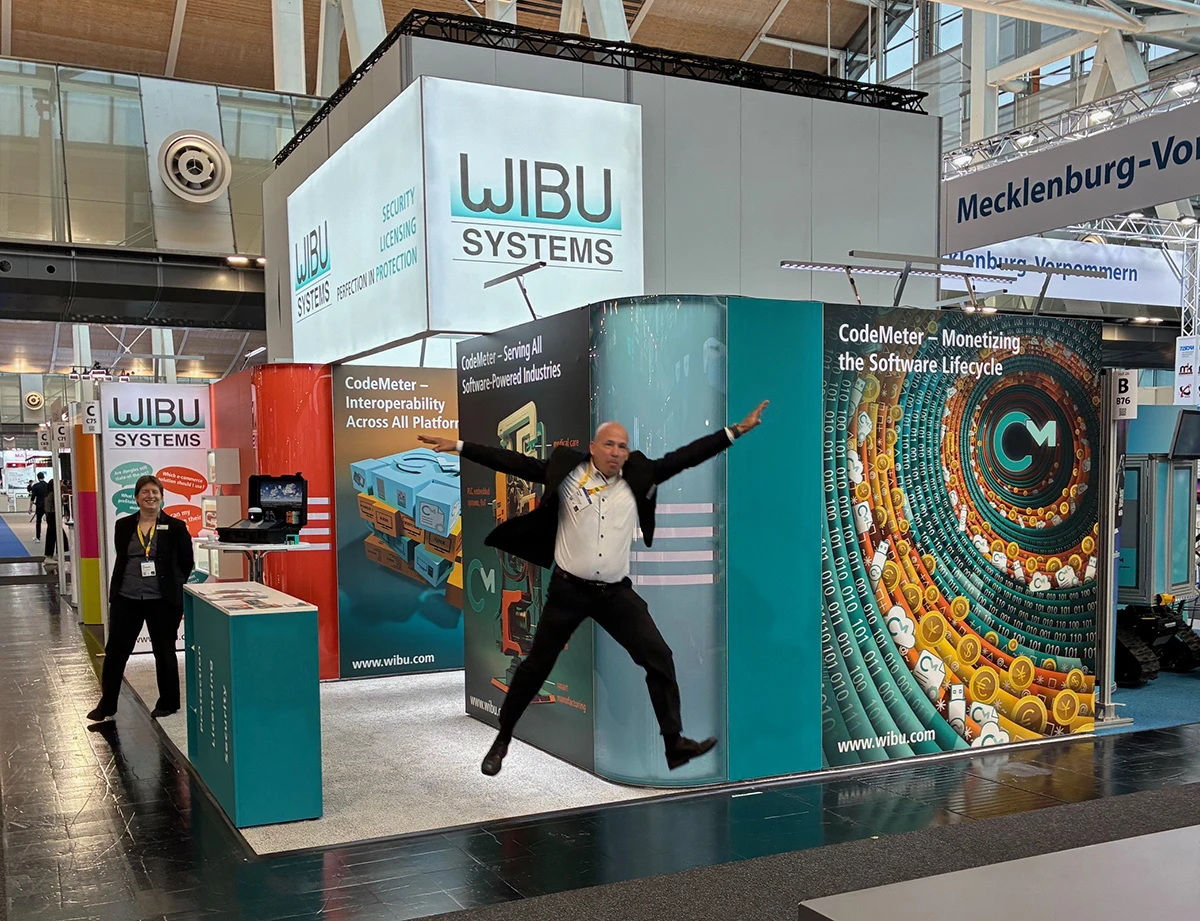
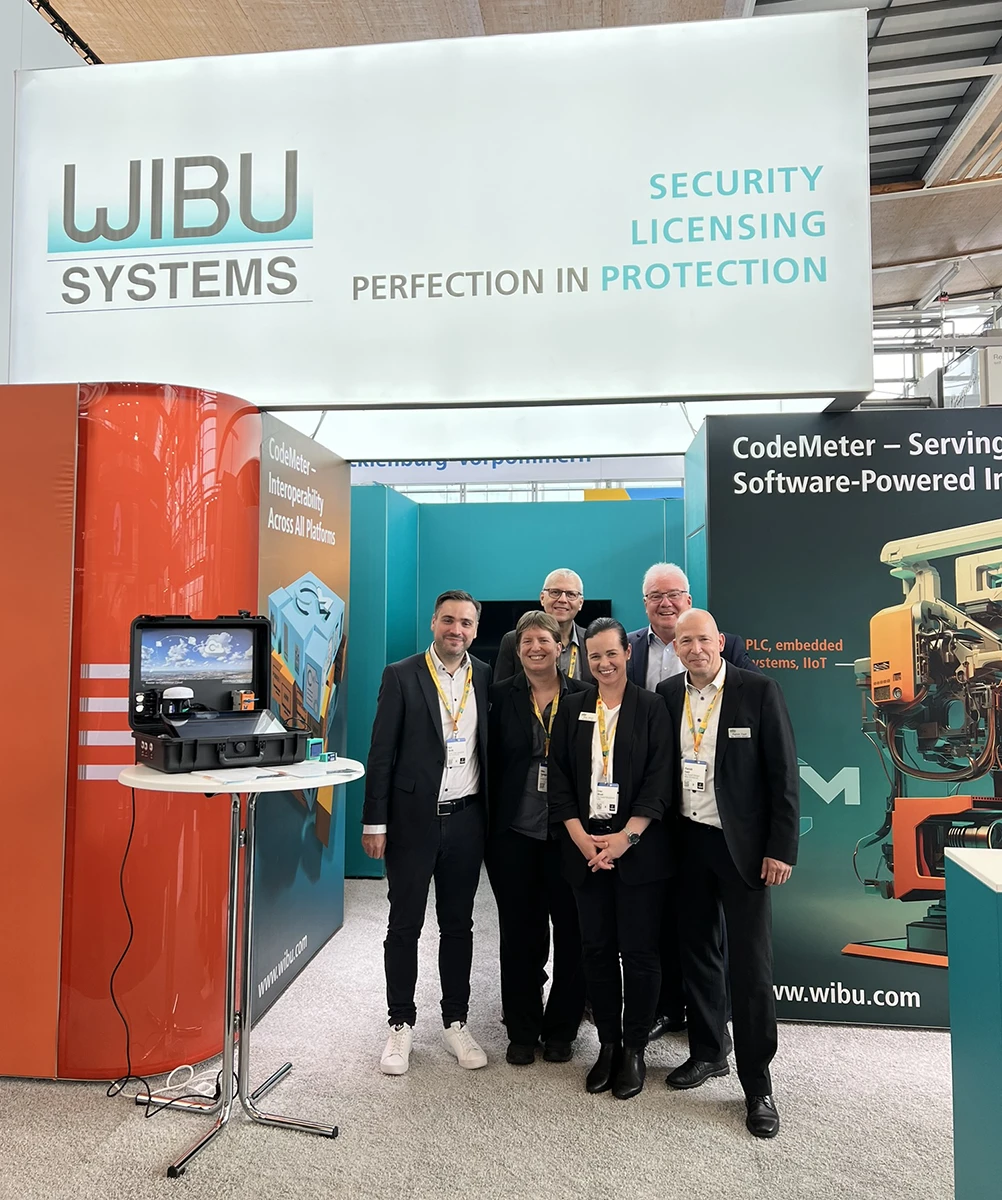
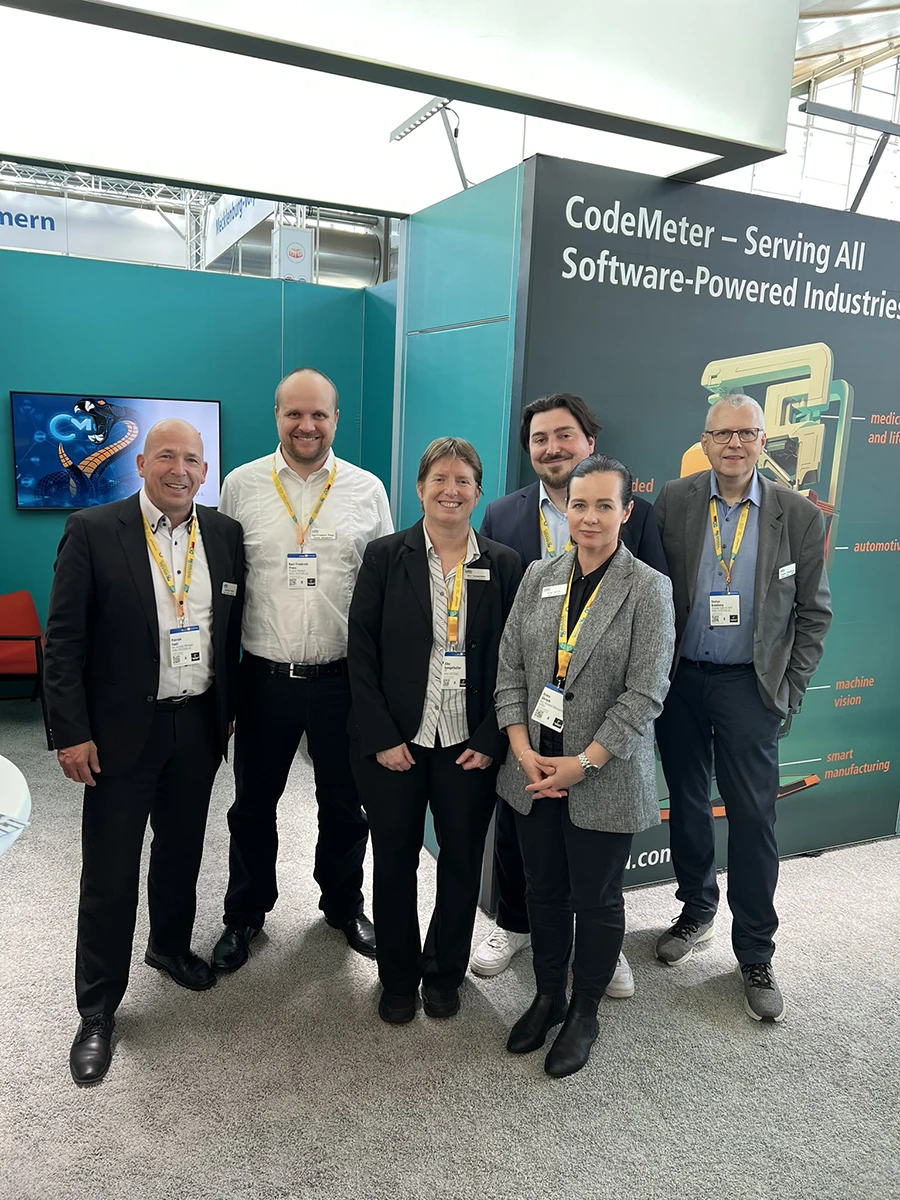
Meet Wibu-Systems at Hannover Messe 2026, Hall 26, Booth C75.
Discover how secure licensing, software protection, and regulatory readiness enable scalable, future-proof industrial software business models.